Three Saw Blades
Nicola Rawnsley
£260
Description
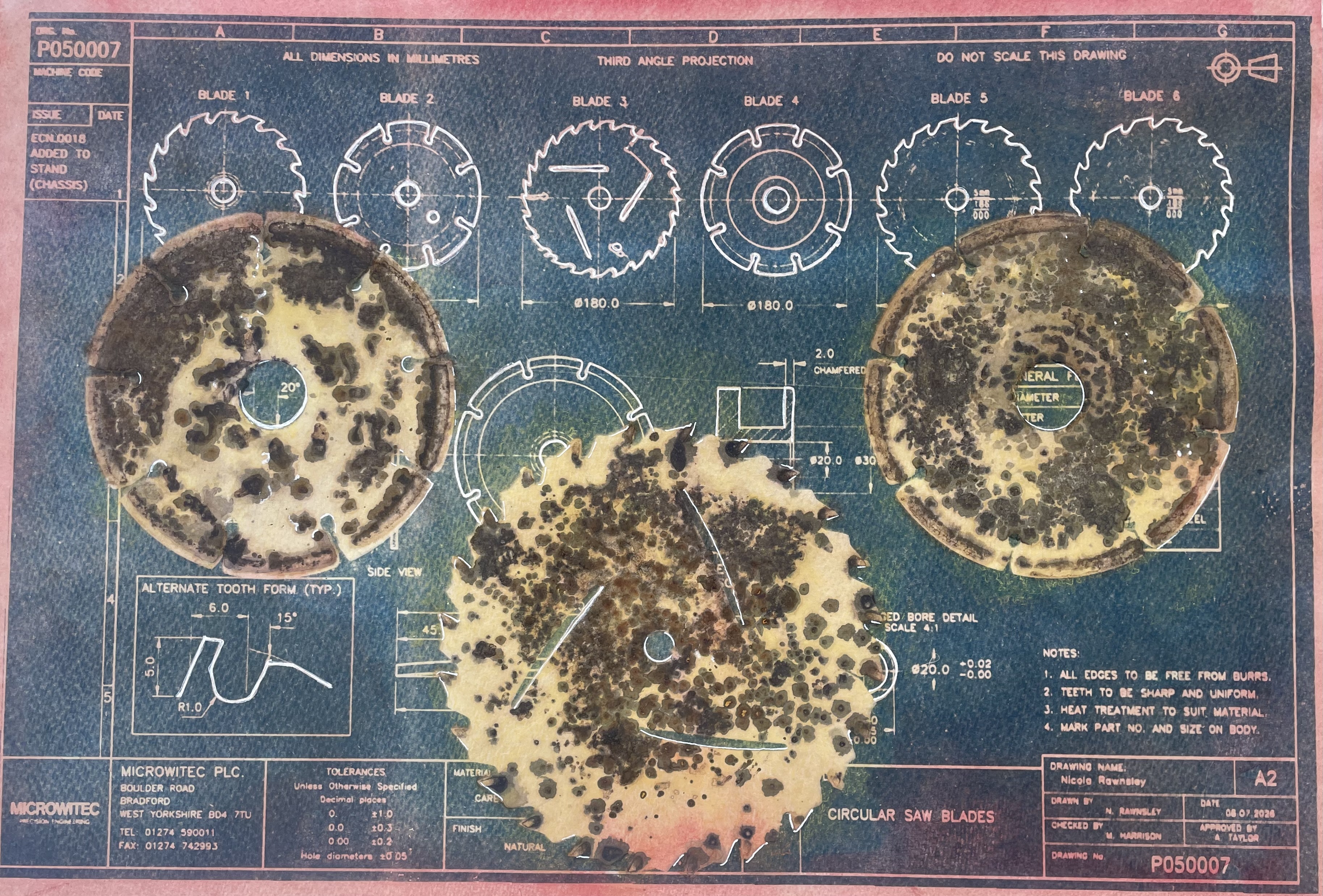
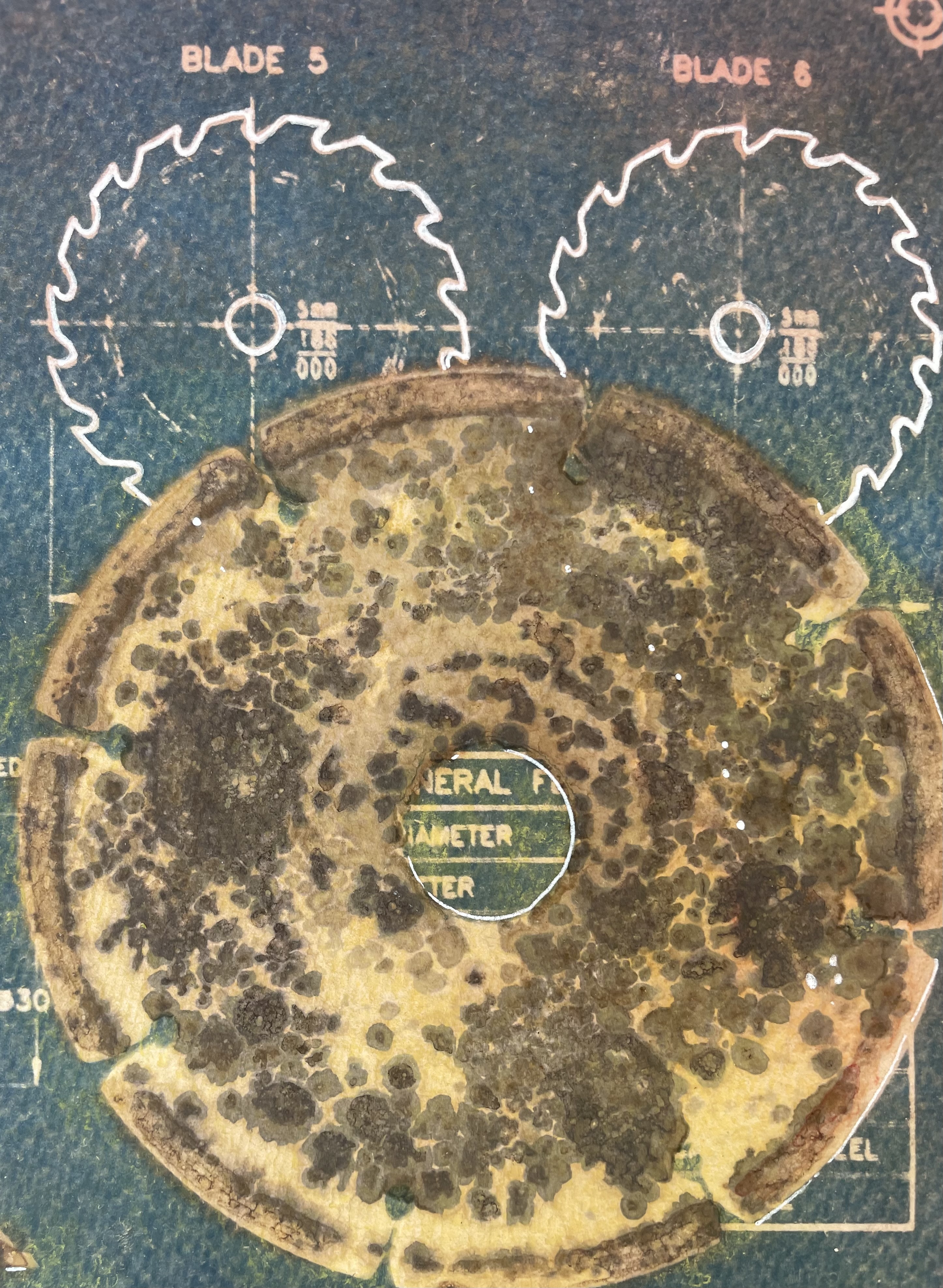
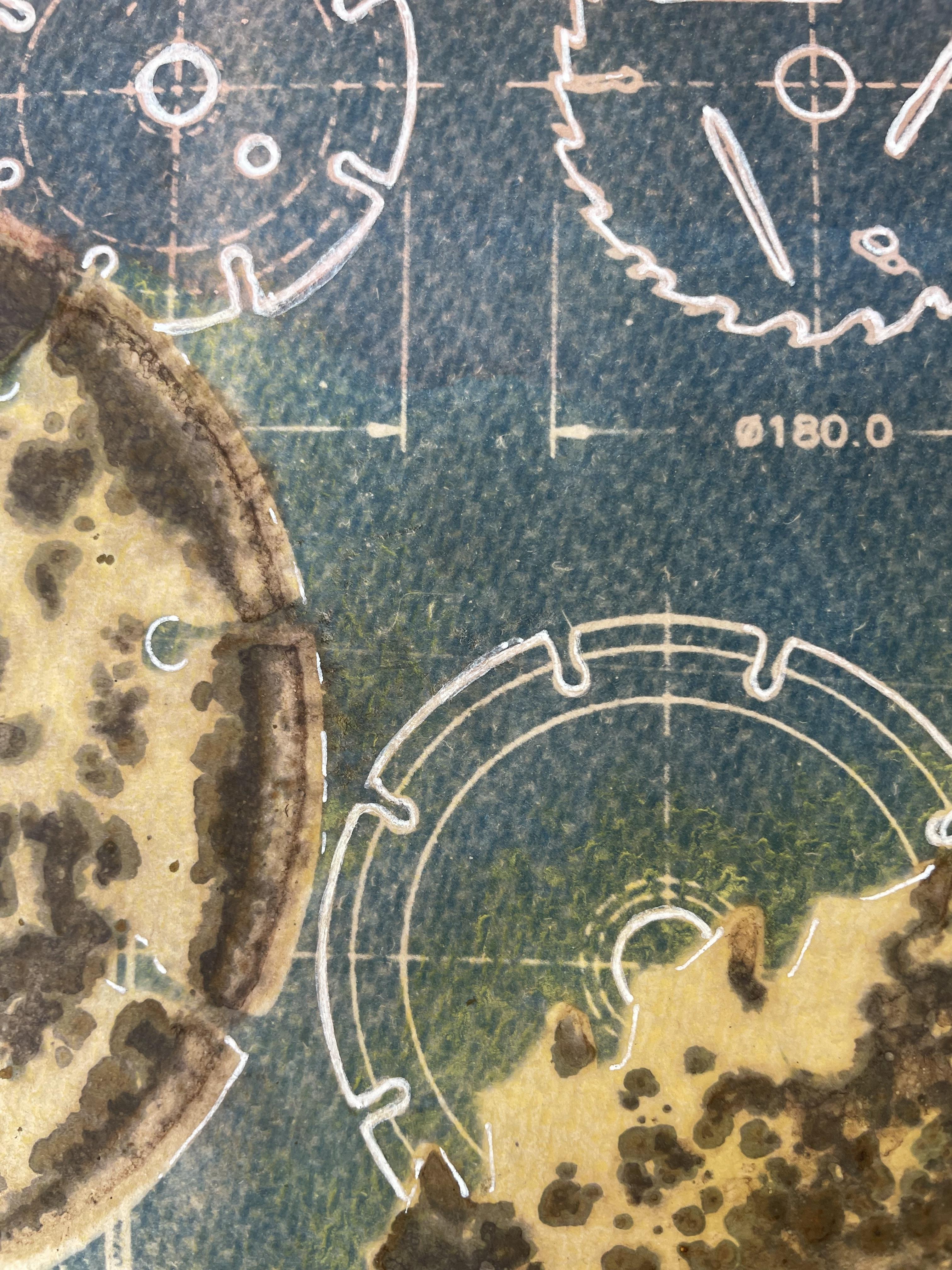
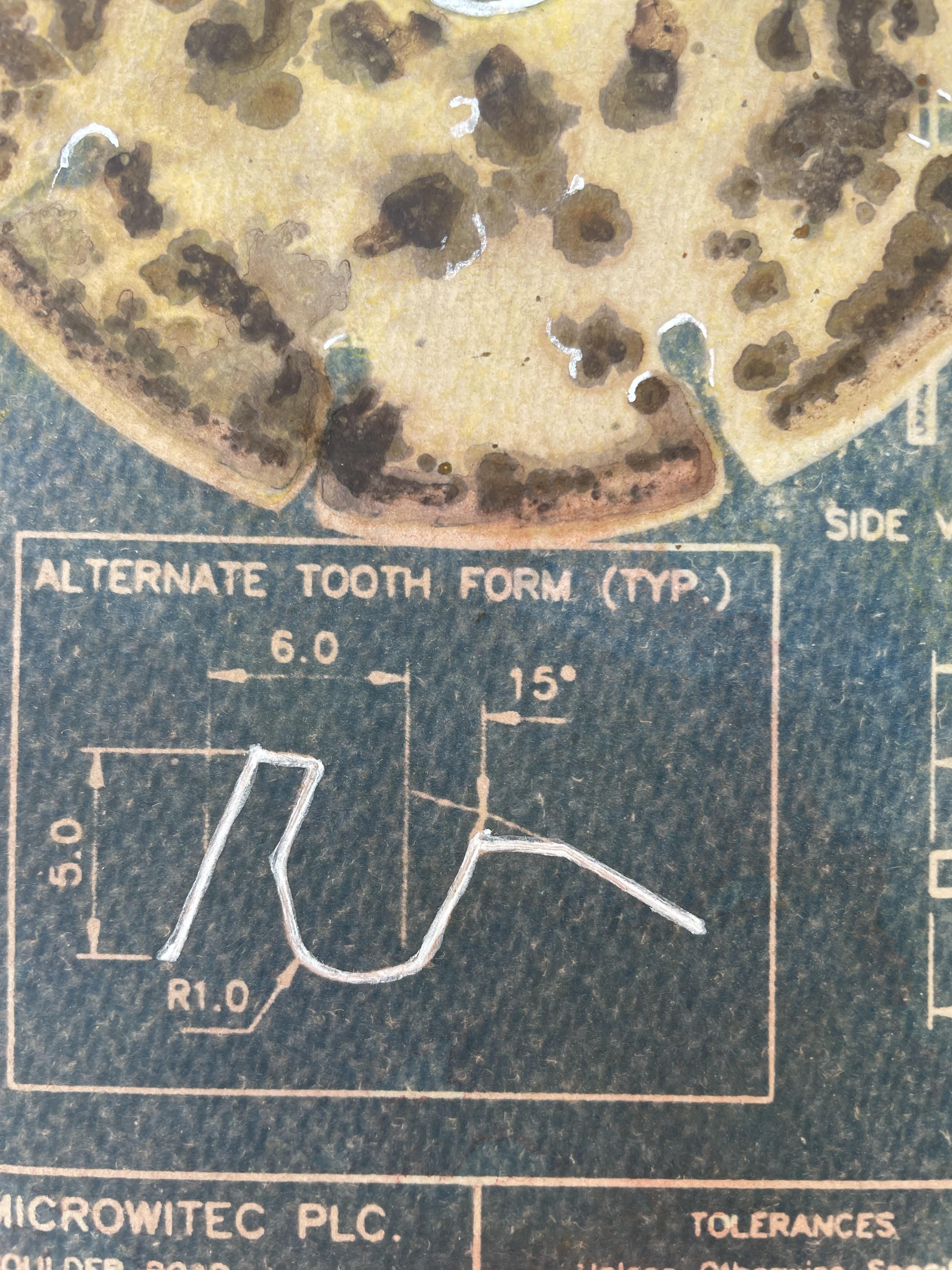
The work presents a cyanotype of a technical drawing of saw blades, disrupted by the physical process of rusting, allowing oxidation to transfer onto the paper. Watercolour, ink and enamel were then layered into the image. The work explores our desire to control and impose order on the impermanence of life. Rust becomes a metaphor for nature reclaiming the industrial object, indifferent to human design, ownership and use.
Details
Medium
Cyanotype and rust
Dimensions
40 W x 30 H cm
Delivery
Delivery available to these regions:
Region
Price
UK Mainland
£6.00
Scottish Highlands and Islands
£6.00
- Orders will be processed and dispatched within 5 business days of receiving the order.
- Estimated delivery times: 10 business days.
- Delivery will be tracked and tracking information provided once the order has been dispatched.
- Delays caused by postal services are beyond my control.
Legals
Terms of Sale
- Prices are as listed on Exhibtd.
- Payments are securely processed through Stripe.
- If you change your mind, you may cancel or return the item within 14 days of receipt.
- Please contact me before returning any items so we can arrange the process smoothly.
- Shipping costs for returns are the responsibility of the buyer unless the item is damaged.
- Please contact me if your item doesn’t arrive within 12 business days of dispatch.
- If your item arrives damaged, please contact me within 3 days of receipt with photos and a description of the damage.
- Refunds will be processed directly to your bank account. This is dependent upon you providing your bank details in a timely manner.
- You can cancel your order before dispatch. Please contact me as soon as possible if you wish to cancel through your Exhibtd account area.
- Custom or commissioned artworks cannot be returned unless faulty or damaged.
Disclaimers
- Colours may vary slightly between on-screen images and real artworks due to monitor settings and lighting.
- Every original piece is handmade; small variations and imperfections are part of its character.
- Frames shown in images are for display purposes unless otherwise specified.
Copyright
- All artworks, designs, product images, and written content in this shopfront are copyright of Nicola Rawnsley, 2026.
- Works may not be copied, reproduced, or distributed without prior written permission.
- Purchasing an artwork or print does not grant reproduction rights.
Data Protection
Customer data is stored securely and retained only as long as necessary. Your personal details will only be used to:
- Process and deliver your order
- Communicate with you about your purchase
- Comply with my legal, tax, and record-keeping obligations
About the artist
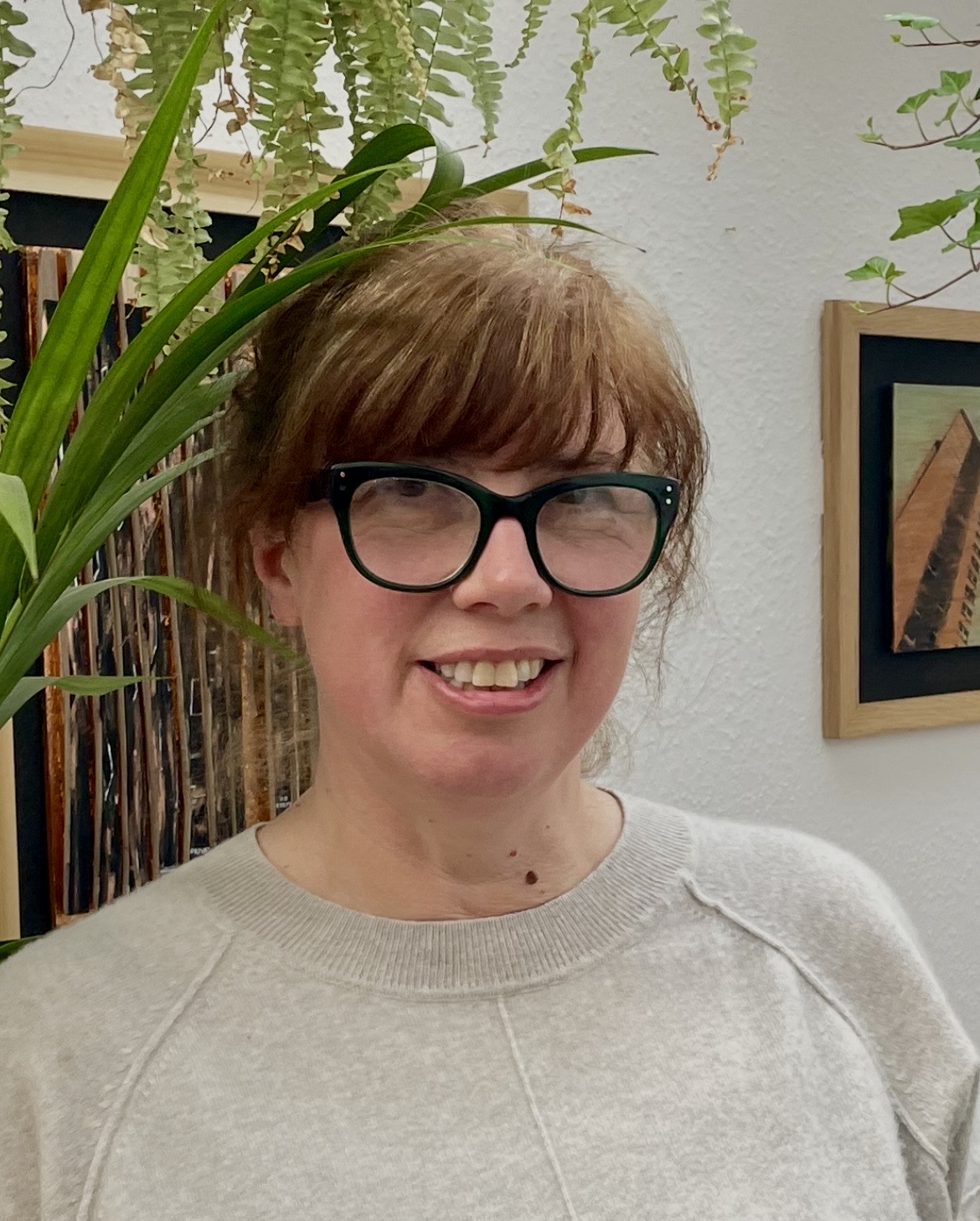
Nicola Rawnsley
West Yorkshire, United KingdomNicola Rawnsley
West Yorkshire, United KingdomBorn in 1970 and raised on a council estate in Bradford. I became the first in my family to attend university. A solo exhibition in London in 1998 marked an early high point in my practice, before family took precedence. I returned to art through an MA in Creative Practice, graduating in 2023.
My practice explores the human condition and our persistent desire to own, control and impose order on a world defined by change. I work with industrial artefacts, discarded tools, technical drawings, rust and other materials that carry the traces of human intervention. Through processes of making, forcing, marking and decay, I bring systems of precision and control into confrontation with natural cycles that cannot be subjugated.
Rust is central to this thinking. It becomes both material and metaphor: a slow, persistent process through which steel returns to the earth, quietly undoing the intentions and ownership once invested in it. Industrial objects may be designed, forged, used and discarded, but oxidation outlasts each stage of their human purpose.
My work sits in this tension between permanence and change, human intention and natural process. It asks what remains when the structures we create to control the world inevitably begin to disappear and nature continues, indifferent to human actions.